
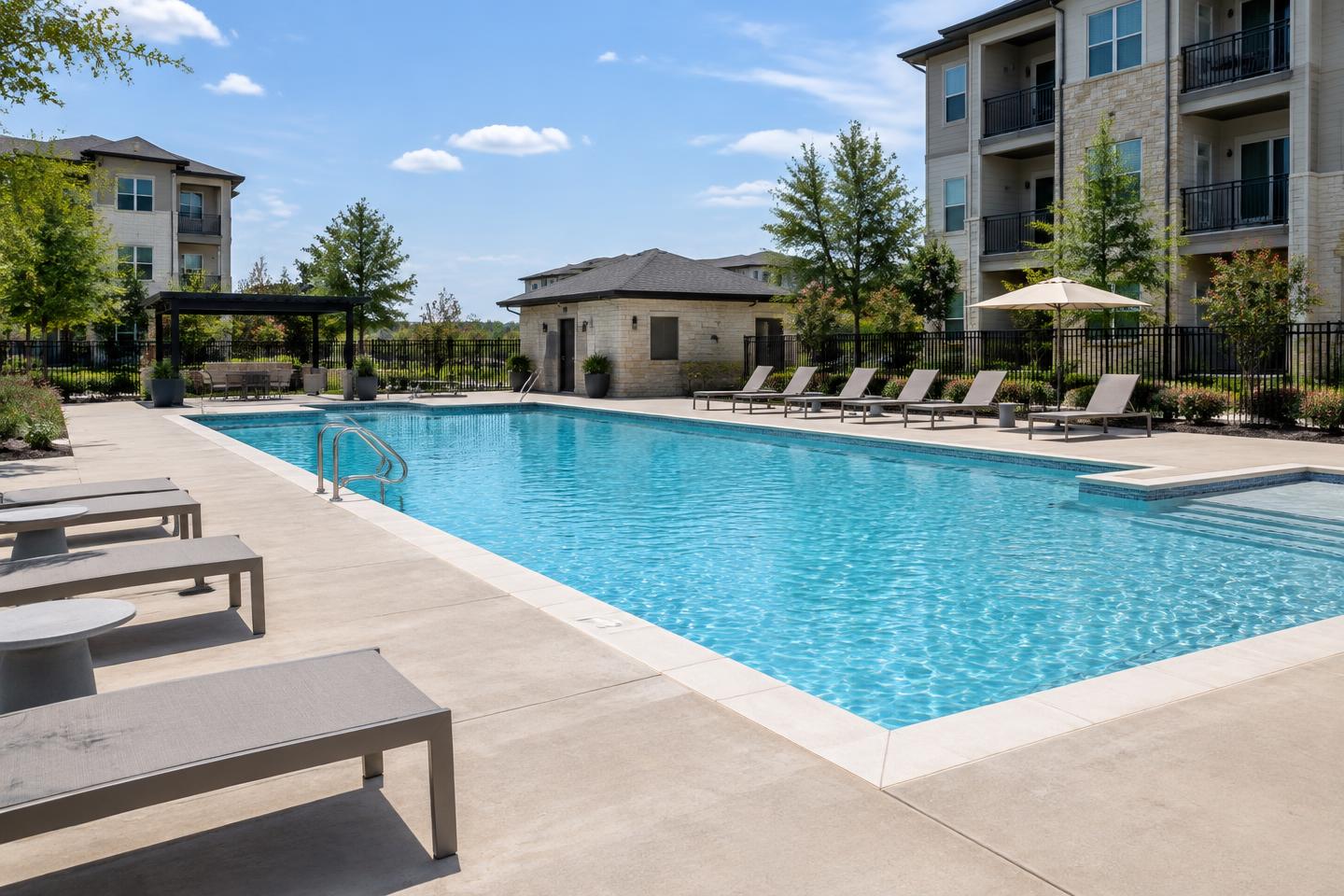
An amenity that operates between visits
A technician may see the pool for only part of the week. Residents use it before and after that visit, and traffic can change sharply on a warm weekend. An apartment pool plan should identify what the service provider does on site, what the property team checks in between and who responds to an unexpected closure or equipment alarm.
If multiple buildings share a pool, access and communication matter: maintenance staff, leasing staff and management may all hear about the same issue at different times. Keep one clear record of test results, visits, repairs and reopening decisions so the next shift has the same information.
Keep cleaning and operations connected
A pool can look appealing while a pump is losing prime, a feeder is drifting or water records are incomplete. Cleaning should include the visible work—debris removal, brushing and floor care—but the operating plan also needs water testing and attention to circulation. Define how a cleaning observation becomes a repair request rather than an unresolved note.
Wind, landscaping and storms can change a courtyard pool's debris load. Agree on what counts as routine work and what requires a separate visit after heavy weather or an event. For a site with a spa or wading pool, list each feature explicitly in the scope.
Plan for turnover and seasonal peaks
Opening hours, summer attendance and resident events affect staffing and testing needs. When a property changes management or service providers, pass along equipment manuals, normal filter pressure, logs, permits and open work orders. The handoff is a chance to identify repeated failures before they become the next team's problem.
A written approval process helps with repairs: who authorizes work, who communicates an amenity shutdown to residents and who verifies conditions before use resumes. The facility operator retains responsibility for applicable rules and safe operation.
What a service scope can include
- Routine surface, wall, floor and basket care
- Water-testing responsibilities and written logs
- Pump, filter, heater and control observations
- Escalation of repairs and resident amenity closures
The actual work and visit schedule should be agreed for the property's pool, equipment and operating needs. Compare all services before requesting a scope.
Questions for the property team
Who tests water on days without a service visit?
What is included for attached spas or water features?
How will a closure or repair recommendation reach management?
A practical handoff between shifts and visits
For a apartment communities pool, a useful record says when the last check happened, what the measured results were, whether each water feature was available for use and what remains open. Keep observations separate from completed corrective work. If a condition has not been resolved, name the person who will review it and the next check due.
For an estimate, share recent logs, any previous inspection findings, equipment faults and your existing operating schedule. This helps distinguish a recurring service task from a repair or a responsibility that stays with the facility operator.
CPO oversight and health-department rules
A Certified Pool & Spa Operator (CPO) credential is training, not a permit or a substitute for the facility operator’s responsibilities. Identify who is trained to oversee the pool, who performs and records tests during open hours, and who has authority to close it when conditions are unsuitable. Check the qualifications required for your particular facility with its regulator; this page does not establish that any member of our team holds a CPO credential.
Texas public-pool requirements are published by the Texas Department of State Health Services. Permits, inspections and additional rules may be administered by the city or county health department responsible for the property address. Do not assume City of Houston rules apply to every suburb. Keep permits, water logs and inspection correspondence available, and confirm the current requirements directly with the responsible authority.
For a checklist of information to gather before an inspection, see inspection preparation. A service visit does not certify compliance or replace official inspection.
Questions property teams ask
Who tests the pool when the service technician is away?
The property should assign that responsibility explicitly in its operating plan. A service visit does not replace testing required during operating hours.
Can one scope cover a pool and attached spa?
List both amenities in the scope, including separate testing and logs where applicable. Shared equipment does not make their operating conditions identical.
Prepare a apartment communities estimate request
Call (832) 990-8645, or describe the site and the work you need. This form copies your details and does not send a request or secure an estimate.
For an immediate safety concern, follow the property's closure and emergency procedures rather than using this form.
Houston-area planning
Requirements depend on the facility address, pool classification and responsible authority. Start with the Texas public pool rules and confirm local permits and inspections with the authority for your site. Our Houston metro area guides explain what location details are helpful to share.
Tell us your property type, location, number of water features and the issue or ongoing work you need. Site availability and scope are confirmed individually; these pages are planning information, not a promise of service at every address.
Prepare an inquiry