
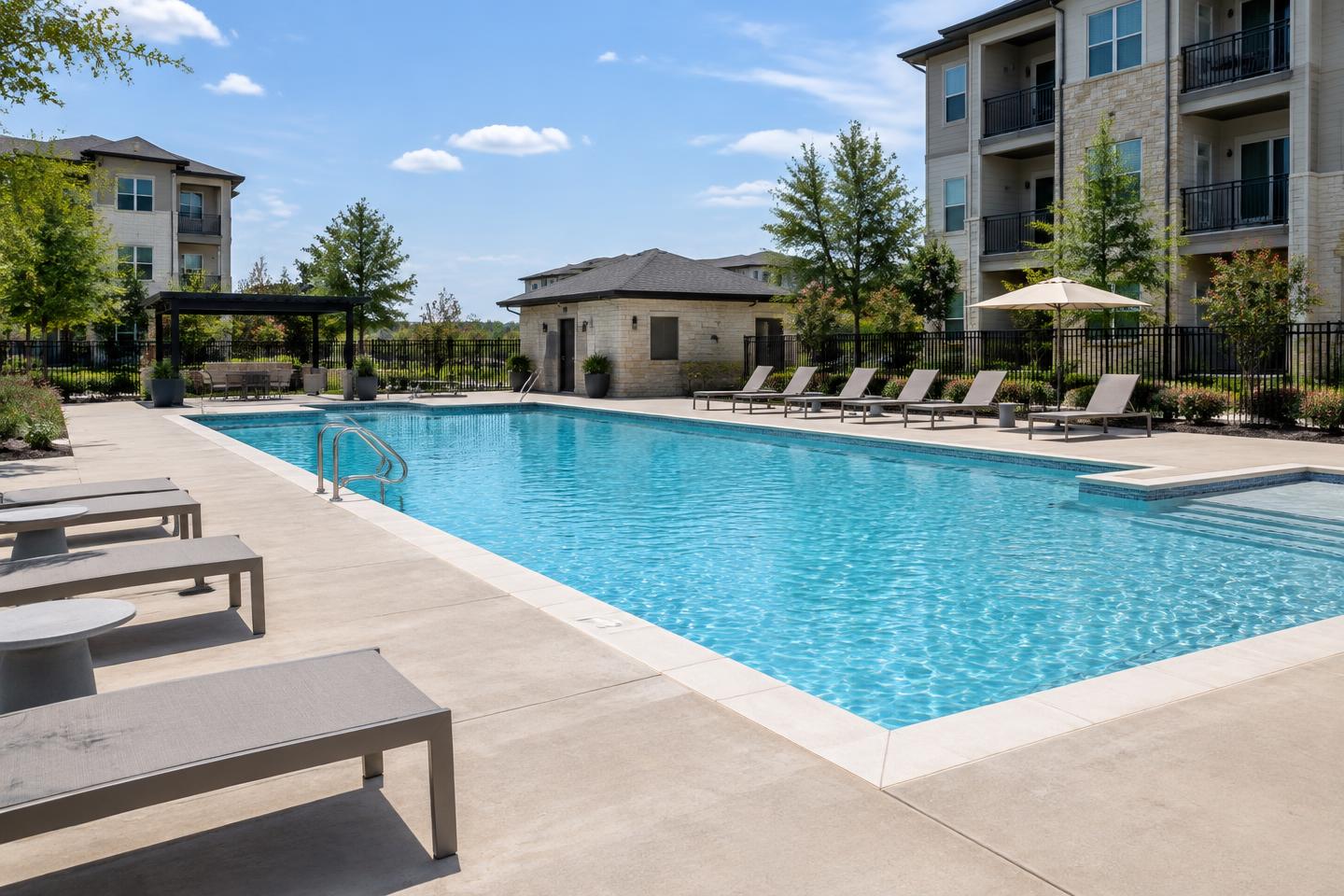
Start with the operating picture
How to build a commercial pool maintenance schedule in Houston for hotels is the question that comes up when staff describe a route calendar that ignores how the building actually uses the water. The system underneath that complaint is visit timing, on-site testing, and after-hours coverage. This version is written for hotels. Guest load tracks occupancy, conferences, and weather, not a leasing calendar. The front desk hears the complaint and engineering hears it later, often after someone has already reset a breaker. A spa, a main pool, and a splash feature can share a room and still need separate readings. The people who have to act are chief engineer and the manager on duty.
The cause we see most often is straightforward: a weekly visit copied from another property while open hours, weekend load, and staffing stay unwritten. In the Houston metro that shows up faster because of heat, sudden rain, and weekends that do not resemble weekday test logs. Decks that stay shaded and grow a film after sprinkler cycles makes the same failure look different from one property to the next. Treat the symptom as a prompt to look at visit timing, on-site testing, and after-hours coverage, not as a full diagnosis.
What is actually going wrong
A route calendar that ignores how the building actually uses the water is the surface. Under it, a weekly visit copied from another property while open hours, weekend load, and staffing stay unwritten. A hotel pool does not get a pass because it is smaller, newer, or "usually fine." The useful description is the one a supervisor can read on the next shift without calling the person who was there.
Separate the water from the equipment before spending money. Open hours, peak days, who is on site, and which bodies of water share the equipment pad. If flow is poor, chemistry readings taken in a dead pool describe a stagnant sample, not the facility. If flow is fine and the readings still fail, the feeder, the bather load, or the test method moves up the list. commercial pool maintenance is the scope that should name which of those checks are included.
Write this down before anyone treats or resets
Before a chemical change or a breaker reset, record the time, the name of the person looking, whether users are still in the water, and open hours, peak days, who is on site, and which bodies of water share the equipment pad. Add filter pressure, a note on basket condition, and the controller fault if one is displayed. Take a photo of the controller screen if the code will disappear on reset.
The wrong first move is selling a fixed weekday visit as if it covers testing required while the pool is open. That move feels helpful and it destroys the evidence. On a hotel pool, the person who wants the gate reopened is rarely the person who will explain the failure to an inspector later. Leave the scene understandable. Then decide whether the pool stays closed. Close the pool when circulation, disinfectant, or visibility cannot be maintained, even if the next scheduled visit is tomorrow.
How this shows up for hotels
Guest load tracks occupancy, conferences, and weather, not a leasing calendar. The front desk hears the complaint and engineering hears it later, often after someone has already reset a breaker. A spa, a main pool, and a splash feature can share a room and still need separate readings. Apply that pattern to a route calendar that ignores how the building actually uses the water. The chief engineer and the manager on duty needs a note that says what was seen, what is safe to do before a technician arrives, and what nobody on staff should touch. Electrical panels, gas trains, and pressurized filter lids are in the second group.
Whatever the building type, define the between-visit job in writing. A vendor route that sees the pool once or twice a week does not cover testing required while a public pool is open. Texas Administrative Code 25 TAC 265.193 sets testing and water-quality duties, and 265.194 covers operation, including certified-operator supervision. Confirm the current text and the pool's class with the authority for the address. Do not lift a frequency from a blog and treat it as your permit.
A Houston-area constraint, using Montrose as the example
Montrose is the local example for this article because Montrose pools are mostly apartment and small hospitality amenities tucked behind street-facing buildings, with limited equipment-room access from the alley or garage. EaDo is a nearby community, and the health authority can still change at the city or county line between them. If your pool is in neither place, keep the method and swap the address. The county pages for Harris, Fort Bend, Montgomery, and Brazoria explain why the mailing city is not the permit.
Local weather still belongs in the record. Note rain, a power blink, a party, or a week of upper-90s afternoons next to the readings. The log shows checks during open hours and the visit notes match the property's real peaks. If you cannot say that yet, the item stays open. It does not go in the completed column because a technician left the property.
Checks that separate a one-time event from a pattern
Check the arrival condition against open hours, peak days, who is on site, and which bodies of water share the equipment pad. One bad reading after a storm is an event. The same reading every Saturday is a pattern. Patterns are how you decide between a chemical tweak and a repair.
Watch the equipment while you test. Baskets, prime, valve position, and filter pressure explain a large share of "chemistry" complaints. Selling a fixed weekday visit as if it covers testing required while the pool is open. Put the pressure next to the clean-filter baseline if you have one. If you do not, create the baseline the next time the filter is actually clean.
Follow the water through a busy period, not only at opening. For a hotel pool, the failure often arrives in the afternoon. Decks that stay shaded and grow a film after sprinkler cycles can move the afternoon number even when the morning number looked fine. Write both.
Name the decision maker before the weekend. Chief engineer and the manager on duty should know who locks the gate and who may approve a repair. A pattern of a route calendar that ignores how the building actually uses the water that waits on a monthly meeting will become a closure on a holiday.
Compare vessels separately when a spa or second pool is on the property. A passing main-pool test does not clear the other body of water. Visit timing, on-site testing, and after-hours coverage can fail on one vessel and look normal on the other.
Define the proof in advance: the log shows checks during open hours and the visit notes match the property's real peaks. Schedule the review for a specific day. If the proof is missing, the next step is another look at visit timing, on-site testing, and after-hours coverage, not a repeat of the same treatment.
Mistakes that keep the problem on the route
The most expensive mistake is selling a fixed weekday visit as if it covers testing required while the pool is open. The second is logging the visit as complete while the proof is still missing. The third is letting an untrained employee reset, dose, or open a lid because guests are asking. None of those are bad intentions. They are how a route calendar that ignores how the building actually uses the water becomes the normal condition of the account.
Another mistake is copying a fix from EaDo onto a pool in Montrose, or from a residential tip onto a public pool. Product choice, cyanuric acid limits, suction-cover ratings, and testing frequency are not interchangeable. When the question is regulatory, use the Texas DSHS public-pool rules and the local authority. When the question is a field method, CDC's healthy-swimming operations guidance is a reference, not a variance.
Closure, repair, and reopening
Close the pool when circulation, disinfectant, or visibility cannot be maintained, even if the next scheduled visit is tomorrow.
Reopening is a new decision. Ask why the pool was closed, what was repaired or adjusted, and which readings now prove the original failure is gone. "It looks better" is not a reason to unlock the gate. If the failure was a route calendar that ignores how the building actually uses the water, the reopening note should speak to that symptom in measurements. commercial pool maintenance can document what the technician found. The operator still owns the decision to let people swim.
How this fits the rest of the plan
Tie this issue to the annual plan and to the visit scope. A hotel pool that hits a route calendar that ignores how the building actually uses the water every summer does not need a more poetic log. It needs a change in testing times, filter care, feeder maintenance, or approval speed. Review a month of logs before you buy the next part. The rest of the field notes cover the neighboring failures, because cloudy water, lost prime, and a bad log are often the same week.
For the property side of the handoff, use the hotels page. For the place, start with Montrose and confirm the county. Then call (832) 990-8645, or prepare an inquiry on the contact page with the address, the log, and what you believe failed. The form copies your notes. It does not send them. For an active safety issue, follow the property's closure procedure instead of waiting on a form.
Questions property teams ask
Does this replace the testing required while a hotel pool is open?
No. Close the pool when circulation, disinfectant, or visibility cannot be maintained, even if the next scheduled visit is tomorrow. Vendor visits and the operator's checks during open hours are different duties. Confirm the current 25 TAC 265.193 frequency for your pool's class.
When should the amenity close?
Close the pool when circulation, disinfectant, or visibility cannot be maintained, even if the next scheduled visit is tomorrow.
Which service scope matches this problem?
Start with commercial pool maintenance. Bring the log, the filter baseline if you have it, and a description of when the problem appears. A scope that does not name the failing system will recreate selling a fixed weekday visit as if it covers testing required while the pool is open.
What changes for hotels?
Guest load tracks occupancy, conferences, and weather, not a leasing calendar. The front desk hears the complaint and engineering hears it later, often after someone has already reset a breaker. A spa, a main pool, and a splash feature can share a room and still need separate readings.
Rules cited here are starting points. Confirm the current Texas Administrative Code and the health authority for the property address. Nothing on this page is a promise that a specific pool was serviced.